Inventory examples
- Carbon Steel Pipe
- Stainless Steel Pipe
- Drill Pipe
- Oilfield Casing and Tubing
- Line Pipe
What we review
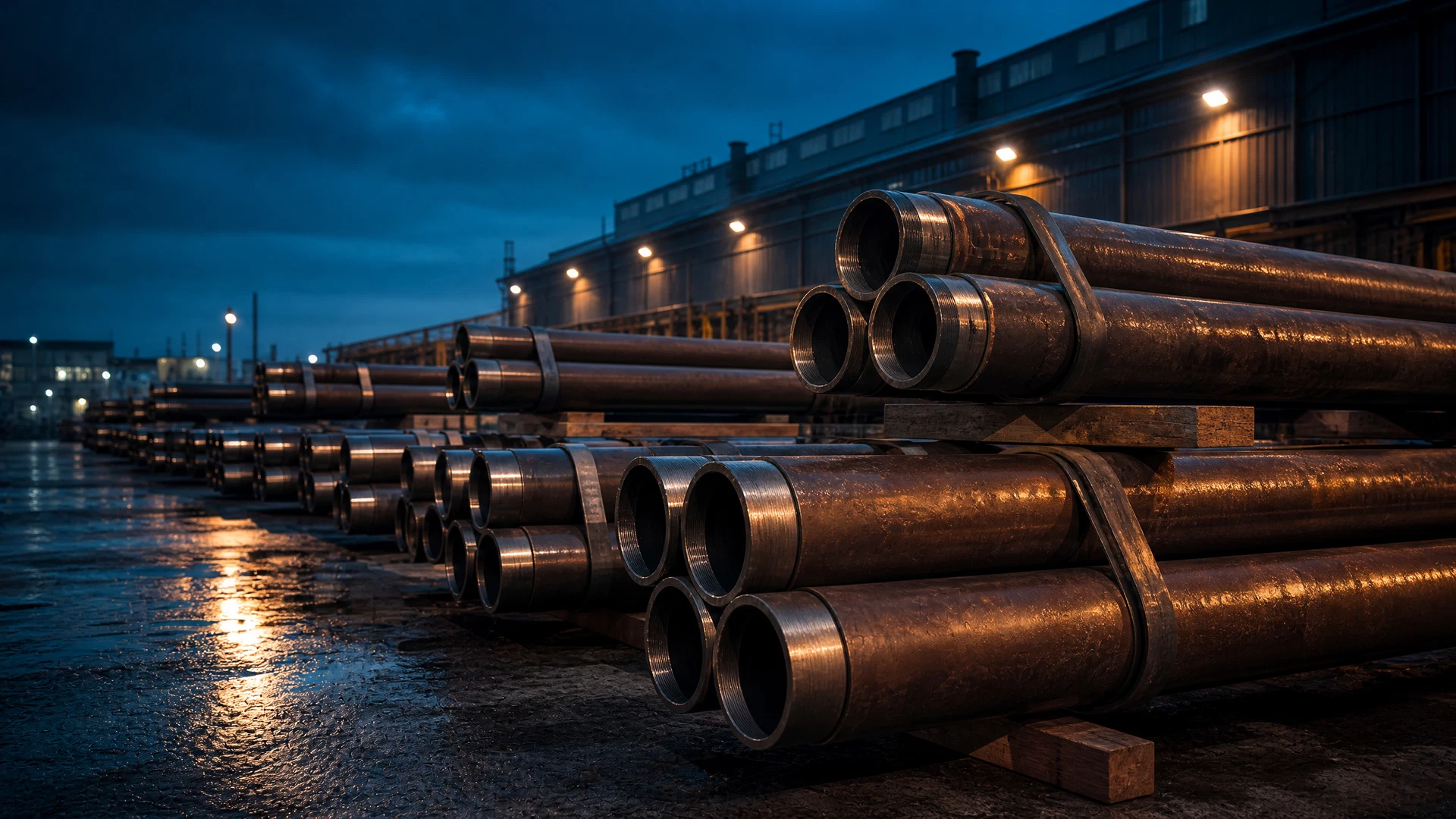
Facilities managers decommissioning aging pipeline infrastructure or operators left with excess casing and tubing after drilling operations often seek a practical outlet for their surplus industrial pipe inventory.
Seller scenario
Facilities managers decommissioning aging pipeline infrastructure or operators left with excess casing and tubing after drilling operations often seek a practical outlet for their surplus industrial pipe inventory.
Inventory scope
Review factors
Surface corrosion, pitting, and internal scaling significantly impact the usability of surplus pipe in high-pressure environments. Structural integrity is often compromised by improper storage, making straightness and thread condition critical factors during the evaluation process.
Providing original mill test reports (MTRs), purchase orders, and detailed inspection records helps verify the metallurgical properties and traceability of the pipe.
General evaluation considerations typically involve assessing the current market demand for specific alloys, the volume of the lot, overall material condition, and the presence of verified mill certifications.
Freight and site facts
Transportation logistics and loading requirements depend heavily on the total weight of the pipe, site accessibility, and the distance to the final processing facility.
Practical answers
Show the complete equipment and close views of outside diameter (od), wall thickness, material grade, heat numbers.
Surface corrosion, pitting, and internal scaling significantly impact the usability of surplus pipe in high-pressure environments. Structural integrity is often compromised by improper storage, making straightness and thread condition critical factors during the evaluation process.
Providing original mill test reports (MTRs), purchase orders, and detailed inspection records helps verify the metallurgical properties and traceability of the pipe.
Start with the nameplate
Clear photographs and a basic inventory list are useful. Do not repair, energize, pressurize, or move equipment solely for this form.