Inventory examples
- Stainless Steel Storage Tanks
- Carbon Steel Tanks
- Mixing Tanks
- Jacketed Process Tanks
- Pressure Vessels
What we review
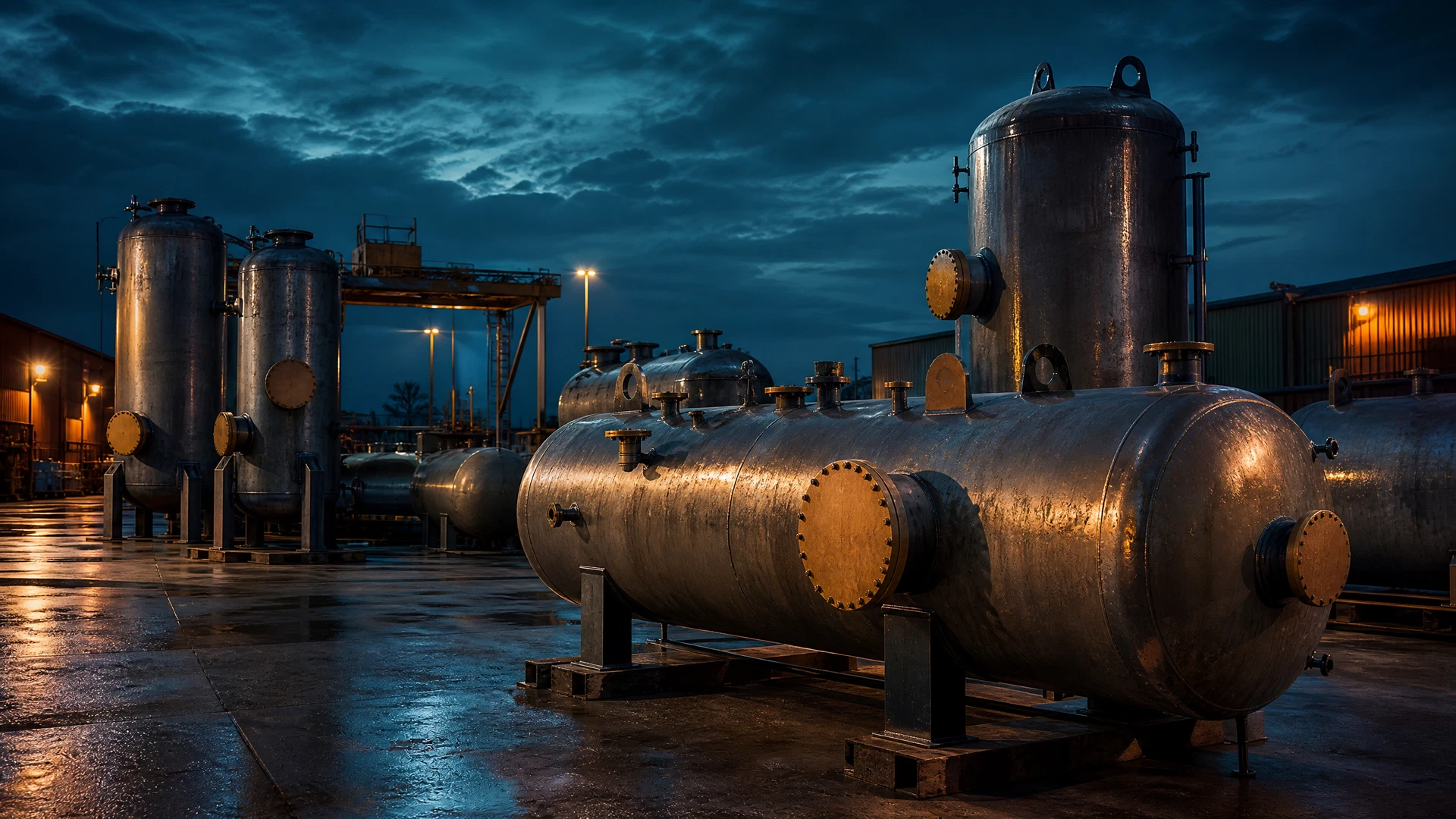
A chemical manufacturing facility upgrading its production lines needs to clear out surplus stainless steel storage and process tanks to make room for new equipment.
Seller scenario
A chemical manufacturing facility upgrading its production lines needs to clear out surplus stainless steel storage and process tanks to make room for new equipment.
Inventory scope
Review factors
Assess the interior and exterior for severe corrosion, pitting, or structural dents that could compromise integrity. The condition of fittings, valves, and jacket integrity is also critical for determining potential reuse.
Providing original manufacturer data reports, U-1A forms, material test reports, and recent inspection records helps establish the vessel's history and specifications.
Market value is generally influenced by the tank's capacity, construction material, pressure ratings, and the presence of specialized features like agitation or heating jackets.
Freight and site facts
Freight arrangements and rigging requirements will vary significantly depending on the tank's dimensions, weight, and the accessibility of your facility.
Practical answers
Show the complete equipment and close views of manufacturer nameplate, serial number, capacity rating, material grade.
Assess the interior and exterior for severe corrosion, pitting, or structural dents that could compromise integrity. The condition of fittings, valves, and jacket integrity is also critical for determining potential reuse.
Providing original manufacturer data reports, U-1A forms, material test reports, and recent inspection records helps establish the vessel's history and specifications.
Start with the nameplate
Clear photographs and a basic inventory list are useful. Do not repair, energize, pressurize, or move equipment solely for this form.