Inventory examples
- Pneumatic Diaphragm Actuators
- Piston Actuators
- Electro-Hydraulic Actuators
- Smart Valve Positioners
Actuator identification guide
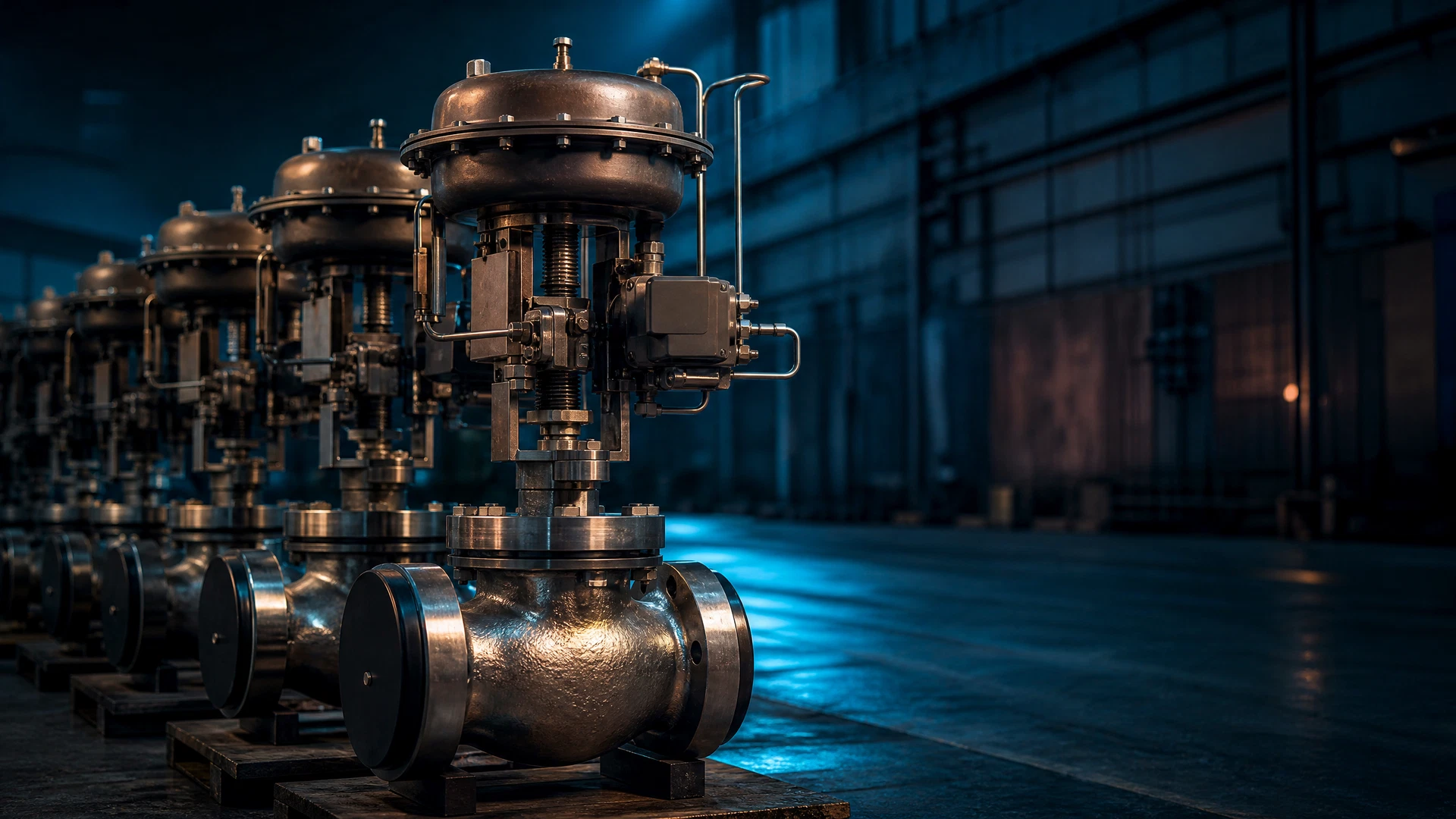
A processing facility upgrading its flow control systems needs to liquidate a surplus of pneumatic diaphragm and piston actuators previously used on automated control valves.
Seller scenario
A processing facility upgrading its flow control systems needs to liquidate a surplus of pneumatic diaphragm and piston actuators previously used on automated control valves.
Inventory scope
Review factors
Evaluation depends on the integrity of the diaphragm or piston seals and the absence of internal corrosion. Units with intact positioner linkages and verified fail-safe mechanisms typically retain better market viability.
Providing recent calibration records, maintenance logs, and original factory specification sheets greatly assists in verifying the operational readiness of the actuators.
General evaluation considerations include the actuator type, compatible valve size, current market demand for the specific brand, and the completeness of attached positioners or I/P transducers.
Freight and site facts
Safe transportation requires proper crating and securing of moving parts, with logistics plans adapted to the specific weight, site access, and load size.
Practical answers
Show the complete equipment and close views of manufacturer nameplate, model and serial number, operating pressure range, fail action configuration.
Evaluation depends on the integrity of the diaphragm or piston seals and the absence of internal corrosion. Units with intact positioner linkages and verified fail-safe mechanisms typically retain better market viability.
Providing recent calibration records, maintenance logs, and original factory specification sheets greatly assists in verifying the operational readiness of the actuators.
Start with the nameplate
Clear photographs and a basic inventory list are useful. Do not repair, energize, pressurize, or move equipment solely for this form.