Inventory examples
- Rack-and-Pinion Actuators
- Scotch-Yoke Actuators
- Linear Pneumatic Actuators
- Rotary Vane Actuators
Actuator identification guide
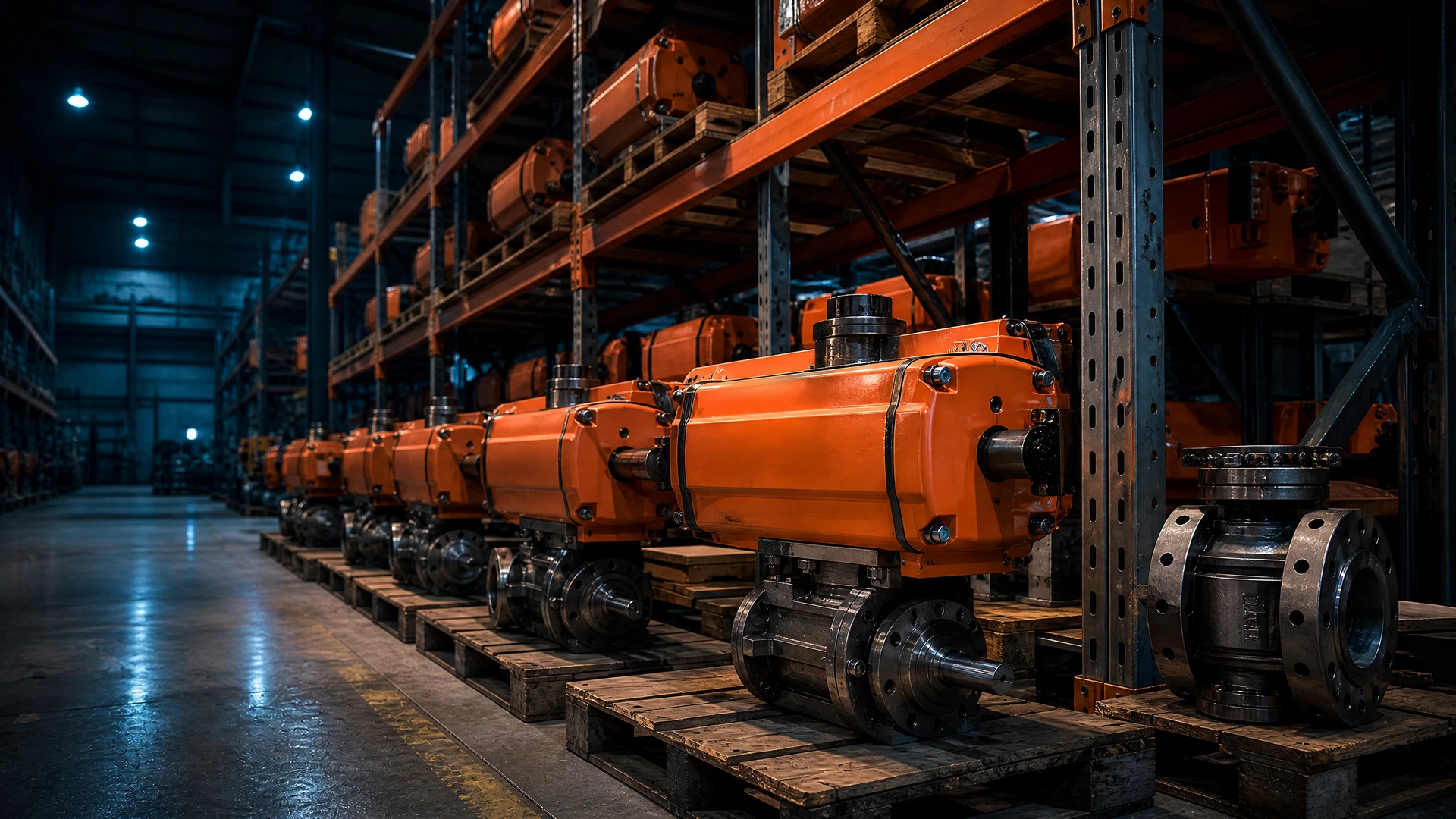
A facility manager decommissioning an outdated processing line seeks to liquidate a surplus of pneumatic rack-and-pinion actuators that are no longer needed for current operations.
Seller scenario
A facility manager decommissioning an outdated processing line seeks to liquidate a surplus of pneumatic rack-and-pinion actuators that are no longer needed for current operations.
Inventory scope
Review factors
Inspect the actuator housing for signs of corrosion, air leaks, or seal degradation. Ensure the internal springs and pneumatic cylinders remain structurally sound and free from excessive wear.
Provide original purchase orders, maintenance logs, and manufacturer datasheets detailing the required supply pressure and torque specifications.
Valuation typically considers the manufacturer brand reputation, overall operational condition, specific torque capacity, current market demand for the model, and the availability of verifiable maintenance history.
Freight and site facts
Logistics and transportation arrangements will depend on the total weight of the actuators, site accessibility, and the specific location of the surplus inventory.
Practical answers
Show the complete equipment and close views of manufacturer name, model number, torque output rating, fail position.
Inspect the actuator housing for signs of corrosion, air leaks, or seal degradation. Ensure the internal springs and pneumatic cylinders remain structurally sound and free from excessive wear.
Provide original purchase orders, maintenance logs, and manufacturer datasheets detailing the required supply pressure and torque specifications.
Start with the nameplate
Clear photographs and a basic inventory list are useful. Do not repair, energize, pressurize, or move equipment solely for this form.