Inventory examples
- Spring-Loaded Pressure Relief Valves
- Pilot-Operated Safety Relief Valves
- Thermal Relief Valves
- Safety Valves for Steam Service
Valve identification guide
A facility manager upgrading a chemical processing plant needs to liquidate a surplus of recently replaced, fully certified relief and safety valves to clear warehouse space and recover capital.
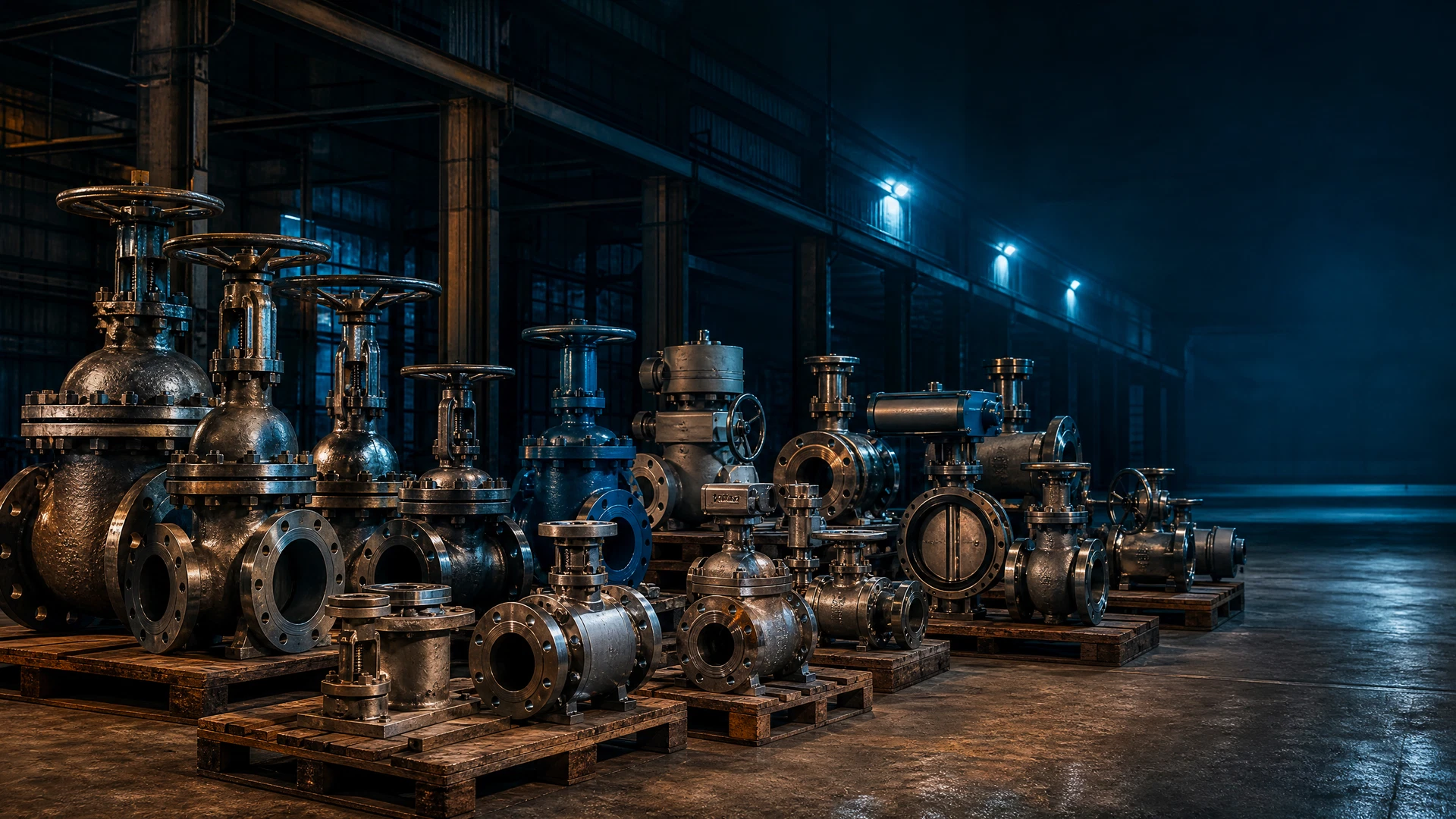
Seller scenario
A facility manager upgrading a chemical processing plant needs to liquidate a surplus of recently replaced, fully certified relief and safety valves to clear warehouse space and recover capital.
Inventory scope
Review factors
Assess the seating surfaces for pitting, scoring, or corrosion, as compromised seals prevent proper pressure relief. Check the spring mechanism for fatigue or rust, and verify that the external housing is free from physical impact damage.
Provide original manufacturer test reports, recent calibration certificates, maintenance logs, and any documentation of ASME or National Board certification.
General evaluation considerations include the brand reputation, exact pressure and temperature ratings, the presence of verifiable testing documentation, and the overall physical integrity of the valve components.
Freight and site facts
Safe transport requires securing the valves upright on heavy-duty pallets with adequate padding to protect sensitive spring mechanisms and flanges during transit.
Practical answers
Show the complete equipment and close views of manufacturer name and model number, set pressure and temperature ratings, inlet and outlet flange sizes, national board (nb) or asme certification marks.
Assess the seating surfaces for pitting, scoring, or corrosion, as compromised seals prevent proper pressure relief. Check the spring mechanism for fatigue or rust, and verify that the external housing is free from physical impact damage.
Provide original manufacturer test reports, recent calibration certificates, maintenance logs, and any documentation of ASME or National Board certification.
Start with the nameplate
Clear photographs and a basic inventory list are useful. Do not repair, energize, pressurize, or move equipment solely for this form.